Vendor Compliance Checklist: Free Checklist for Supplier and Contractor Compliance
Managing supplier and contractor compliance can become difficult when organizations rely on spreadsheets, email follow-ups, and scattered documents.
Different vendors may require different registrations, licences, insurance records, safety documents, and other compliance information. Without a structured checklist, important requirements can easily be missed.
A Vendor Compliance Checklist provides a practical framework for identifying the documents and checks that should be considered when onboarding and managing suppliers and contractors.
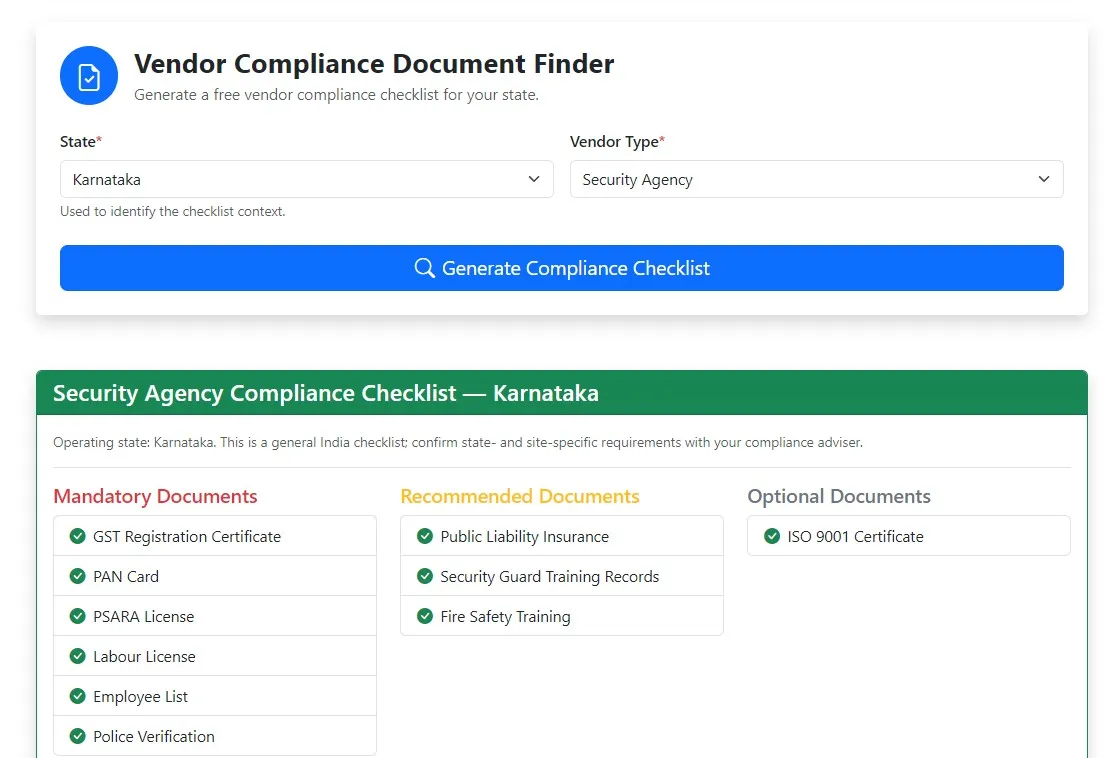
Our free Vendor Compliance Checklist helps you quickly identify common vendor compliance requirements and use them as a starting point for your own supplier compliance process.
Use the Free Vendor Compliance Checklist →
What Is a Vendor Compliance Checklist?
A vendor compliance checklist is a structured list of documents, requirements, and checks used to assess whether a supplier or contractor meets an organization’s compliance expectations.
Depending on the vendor, industry, location, and risk level, a checklist may include areas such as:
- Company information
- Tax registrations
- Statutory registrations
- Insurance
- Labour compliance
- Safety requirements
- Environmental requirements
- Licences and certifications
- Contracts and agreements
- Document expiry dates
The exact requirements should always be determined by the organization’s policies, contracts, industry requirements, and applicable laws.
Why Is Vendor Compliance Important?
Organizations often depend on external parties for products, services, manpower, transportation, maintenance, construction, and other activities.
A structured vendor compliance process can help organizations:
- Identify missing documentation
- Reduce compliance gaps
- Improve vendor onboarding
- Track document validity
- Prepare for audits
- Standardize vendor reviews
- Improve supplier visibility
- Reduce manual follow-ups
Vendor compliance is not only an onboarding activity. Requirements may need to be monitored throughout the supplier relationship.
What Should a Vendor Compliance Checklist Include?
The checklist should be customized to the type of vendor and the work they perform.
Common categories include the following.
1. Vendor Master Information
Start with basic vendor information such as:
- Legal business name
- Business address
- Contact person
- Email address
- Phone number
- Vendor category
- Services or products provided
- Internal vendor reference or code
Accurate vendor master information provides the foundation for effective vendor management.
2. Tax and Registration Documents
Depending on the vendor and jurisdiction, organizations may request documents such as:
- GST registration
- PAN
- MSME registration where applicable
- Business registration
- Other applicable registrations
Requirements vary by business type and location.
3. Labour and Statutory Compliance
For contractors and manpower-related vendors, additional requirements may apply.
These can include:
- PF registration
- ESIC registration
- Labour licences
- Contractor licences
- Employee records
- Attendance records
- Wage or salary records
- Periodic statutory contribution records
The exact requirements should be determined based on the vendor’s activities and applicable regulations.
4. Insurance Requirements
Some suppliers and contractors may need to maintain appropriate insurance coverage.
Depending on the contract and risk involved, organizations may review:
- General liability coverage
- Workers’ compensation or employee-related coverage where applicable
- Professional liability coverage
- Motor or commercial auto coverage
- Other contract-specific insurance
Insurance requirements should be defined according to the organization’s contract and risk requirements.
5. Safety Compliance
Safety requirements are particularly important when vendors or contractors work at company facilities or perform hazardous activities.
Possible checks include:
- Safety training
- PPE requirements
- Safety procedures
- Risk assessments
- Incident records
- Emergency procedures
- Safety certifications where applicable
Higher-risk contractors may require more detailed safety verification.
6. Environmental Compliance
Some vendors may be subject to environmental requirements based on their activities.
Potential checks include:
- Environmental permits
- Pollution control requirements
- Waste management
- Hazardous material controls
- Environmental certifications
- Applicable regulatory approvals
Not every vendor will require the same environmental documentation.
7. Licences and Certifications
Depending on the supplier’s work, organizations may need to verify relevant:
- Business licences
- Professional licences
- Industry certifications
- Technical certifications
- Site-specific approvals
- Regulatory certificates
The checklist should be based on the actual services or products supplied.
8. Contract Requirements
Vendor compliance should also consider contractual obligations.
Review items such as:
- Contract validity
- Insurance requirements
- Service-level requirements
- Compliance clauses
- Renewal dates
- Required certifications
- Reporting requirements
Contract requirements can vary significantly between vendors.
Vendor Compliance Checklist Example
A basic checklist might look like this:
| Compliance Area | Check |
|---|---|
| Vendor Information | Company details verified |
| Tax Registration | Applicable registration verified |
| PAN / Business Identification | Verified where applicable |
| PF / ESIC | Verified where applicable |
| Labour Licence | Verified where applicable |
| Insurance | Required coverage verified |
| Safety | Required safety documentation verified |
| Environmental | Applicable requirements verified |
| Licences | Relevant licences verified |
| Contract | Contract and renewal dates tracked |
| Document Expiry | Expiry dates monitored |
| Audit Trail | Reviews and approvals recorded |
This is a starting framework, not a universal legal checklist.
Free Vendor Compliance Checklist Tool
Creating a vendor checklist from scratch can be time-consuming.
A reusable checklist can help procurement and compliance teams establish a consistent starting point for vendor onboarding and periodic reviews.
Our free Vendor Compliance Checklist provides a quick way to organize common vendor compliance requirements.
It can be used when:
- Onboarding a new supplier
- Reviewing an existing vendor
- Preparing for an audit
- Checking contractor documentation
- Defining vendor document requirements
- Building an internal compliance process
Create Your Vendor Compliance Checklist →
Vendor Compliance Checklist for Manufacturing Companies
Manufacturing companies often work with many different types of suppliers and contractors.
Examples include:
- Raw material suppliers
- Component suppliers
- Packaging suppliers
- Maintenance contractors
- Manpower agencies
- Security agencies
- Housekeeping contractors
- Transport providers
- Engineering service providers
Each category may have different compliance requirements.
For example, a maintenance contractor working inside a manufacturing plant may require more detailed safety, insurance, and labour compliance checks than a low-risk office supplies vendor.
Vendor Compliance Checklist for Contractors
Contractors may require additional checks because they can work directly at company locations.
Depending on the scope of work, organizations may review:
- Contractor registration
- Labour compliance
- Employee information
- PF and ESIC records where applicable
- Insurance
- Safety training
- PPE compliance
- Risk assessments
- Relevant licences
- Site access requirements
The checklist should reflect the actual work and risk associated with the contractor.
Document Expiry Tracking
Collecting a document is only the first step.
Some vendor documents may have expiry or renewal dates. Organizations should track these dates and review documents before they become invalid.
Common examples may include:
- Insurance policies
- Labour licences
- Contractor licences
- Certain permits
- Certifications
- Contract agreements
A useful vendor compliance process should therefore include:
- Document collection
- Document verification
- Expiry date recording
- Renewal reminders
- Updated document submission
- Approval of the replacement document
Manual Vendor Compliance vs Structured Process
| Manual Approach | Structured Compliance Process |
|---|---|
| Excel lists | Standardized checklist |
| Email follow-ups | Defined review process |
| Scattered documents | Centralized records |
| Manual expiry checks | Scheduled monitoring |
| Inconsistent requirements | Standardized requirements |
| Difficult audits | Easier document retrieval |
A structured process does not necessarily require complex software. Even a well-designed checklist can be a useful first step.
Common Vendor Compliance Mistakes
Using the Same Checklist for Every Vendor
Different suppliers and contractors have different requirements.
A transport vendor, maintenance contractor, and office supplies supplier should not necessarily have identical compliance requirements.
Collecting Documents Without Tracking Expiry
A document may be valid today but expire later.
Relying Only on Email
Important compliance records can become difficult to find when they are distributed across email threads.
Not Defining Ownership
Someone should be responsible for reviewing, approving, and following up on vendor compliance requirements.
Ignoring Ongoing Monitoring
Vendor compliance should be reviewed periodically rather than only during onboarding or audits.
Over-Collecting Information
Collecting unnecessary documentation can increase administrative effort without improving risk management.
Best Practices for Vendor Compliance
Categorize Vendors
Group vendors by type, service, and risk.
Define Mandatory Requirements
Identify the minimum requirements for each vendor category.
Use a Standard Checklist
Give procurement and compliance teams a consistent framework.
Track Expiry Dates
Monitor documents that require renewal.
Review Vendors Periodically
Set an appropriate review frequency based on risk.
Maintain an Audit Trail
Record document submissions, approvals, rejections, and changes.
Keep Requirements Current
Review the checklist periodically as business and regulatory requirements change.
Vendor Compliance and Audit Readiness
A structured vendor compliance checklist can make audit preparation easier by helping teams identify:
- Missing documents
- Expired documents
- Pending approvals
- Non-compliant vendors
- Outstanding renewals
- Incomplete vendor records
Instead of searching through emails and folders immediately before an audit, organizations can maintain compliance information continuously.
How VendorCompliancePro Helps
VendorCompliancePro helps organizations manage vendor compliance through:
- Vendor self-service portal
- Centralized document repository
- Compliance tracking
- Automated document expiry reminders
- Approval workflows
- AI-powered document validation
- Compliance dashboards
- Audit trails
- Reports and analytics
The free Vendor Compliance Checklist can be used as an initial planning tool, while VendorCompliancePro provides a more complete workflow for organizations that need ongoing vendor compliance management.
Frequently Asked Questions
What is a vendor compliance checklist?
A vendor compliance checklist is a structured list of documents, requirements, and checks used to review supplier and contractor compliance.
What documents should be included in a vendor compliance checklist?
Depending on the vendor, common areas include company information, tax registrations, statutory documents, insurance, labour compliance, safety, environmental requirements, licences, and contracts.
Is there one universal vendor compliance checklist?
No. Requirements vary by vendor type, industry, location, services, risk level, contract, and applicable regulations.
Should vendor compliance documents have expiry tracking?
Where documents have validity periods, tracking their expiry and renewal dates can help prevent gaps.
Can contractors use a vendor compliance checklist?
Yes. Contractor checklists can include additional requirements related to labour, safety, insurance, licences, and site-specific compliance.
How often should vendor compliance be reviewed?
The appropriate frequency depends on the vendor and risk level. Higher-risk vendors may require more frequent reviews than lower-risk vendors.
Is the Vendor Compliance Checklist free?
Yes. The Vendor Compliance Checklist is available as a free online tool to help users create a practical starting point for vendor compliance reviews.
Conclusion
A vendor compliance checklist provides a simple and structured way to organize supplier and contractor compliance requirements.
The most effective checklist is not necessarily the longest one. It should focus on the requirements that are actually relevant to the vendor, industry, risk level, contract, and applicable regulations.
If you need a quick starting point, use the free Vendor Compliance Checklist to organize common vendor compliance requirements and build a more consistent supplier management process.
Try the Free Vendor Compliance Checklist →