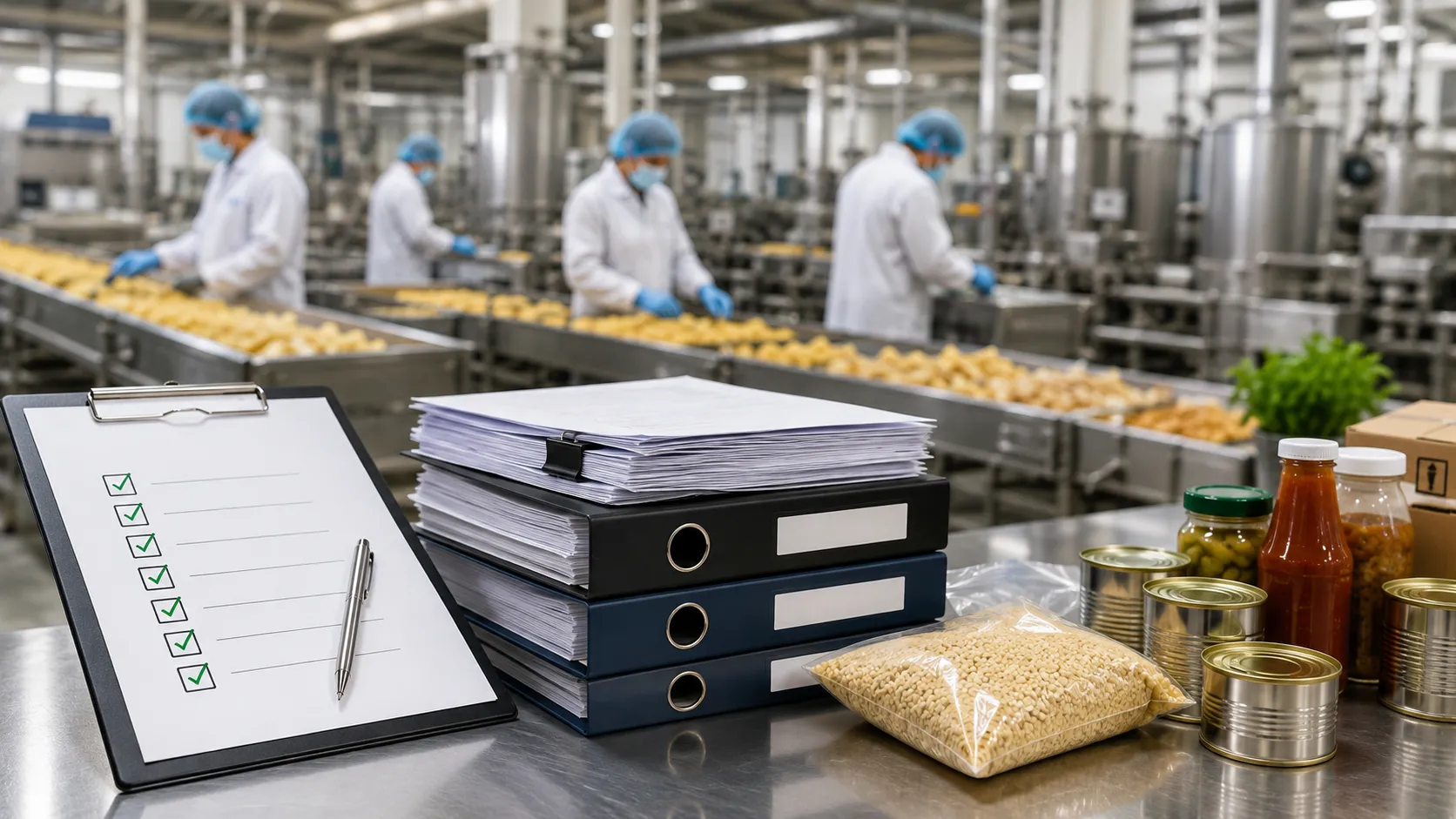
Food Processing Supplier Compliance Checklist
Food processing companies depend on a large network of suppliers to keep production running.
A typical food processing business may source:
- Raw agricultural materials
- Dairy ingredients
- Meat and poultry
- Seafood
- Spices
- Grains
- Oils and fats
- Additives and ingredients
- Packaging materials
- Cleaning chemicals
- Maintenance services
- Pest-control services
- Logistics and transportation
- Contract labour and facility services
Each supplier can have different documentation, quality and compliance requirements.
The challenge is not simply collecting documents when a supplier is onboarded.
Food processing companies also need to know:
- Which suppliers are approved
- Which documents are mandatory
- Which documents have been submitted
- Whether the submitted documents are the expected documents
- Which documents are valid
- Which documents are approaching expiry
- Which documents have expired
- Which supplier records are incomplete
- Which suppliers require follow-up
A structured food processing supplier compliance checklist can help procurement, quality, food-safety and operations teams manage these requirements more consistently.
Important: This is a practical supplier-management checklist, not legal advice. Exact requirements depend on the food business, products, supplier category, location, contract and applicable regulations. Food processing companies should confirm their specific requirements with their legal, food-safety, quality, procurement and compliance teams.
Why Supplier Compliance Matters in Food Processing
Supplier compliance is particularly important in food processing because incoming materials can directly affect:
- Food safety
- Product quality
- Traceability
- Production continuity
- Customer requirements
- Audit readiness
A supplier may be approved today but later provide an expired certificate, changed product specification or incomplete supporting documentation.
For this reason, supplier compliance should be treated as an ongoing process, not a one-time onboarding activity.
A practical workflow is:
Supplier Identification
        ↓
Supplier Category
        ↓
Required Documents
        ↓
Document Collection
        ↓
Document Validation
        ↓
Quality / Compliance Review
        ↓
Supplier Approval
        ↓
Expiry & Review Tracking
        ↓
Renewal / Follow-Up
1. Supplier Master Information
Start with a complete supplier profile.
Depending on the company’s supplier onboarding process, this may include:
- Legal business name
- Trade name
- Registered address
- Operating address
- Contact person
- Email address
- Phone number
- PAN
- GSTIN where applicable
- Bank details
- Supplier category
- Product or service category
- Manufacturing location
- Contract start date
- Contract end date
- Internal supplier owner
- Approved plant or facility
A centralized supplier master helps prevent duplicate supplier records and makes document management easier.
2. FSSAI Licence or Registration
For applicable food businesses, FSSAI licensing or registration is an important area to consider.
FSSAI states that applicable food business operators in India are required to obtain the relevant licence or registration, with requirements depending on the nature of the food business.
For food processing suppliers, companies may want to track relevant FSSAI documentation and information according to their supplier approval process.
Potential fields include:
- FSSAI document type
- Licence or registration number
- Supplier name
- Manufacturing location
- Issue date where applicable
- Validity or expiry information where applicable
- Uploaded document
- Review status
The exact requirements should be confirmed according to the supplier’s business activity and applicable FSSAI framework.
3. GST and PAN Documents
Depending on the supplier and procurement policy, food processing companies may collect:
- PAN
- GST registration certificate where applicable
- GSTIN
- Tax declarations
- Bank details
- Other business documentation
These records help procurement and finance teams maintain accurate supplier information.
4. Food-Safety Documents
Food processing companies may require additional food-safety documentation from suppliers.
Depending on the supplier category and internal policy, this may include:
- Food-safety certificates
- Food-safety management documentation
- Hygiene-related records
- Supplier declarations
- Product safety documentation
- Other food-safety records
The exact requirements should be defined based on the supplier’s products and the company’s food-safety program.
5. Quality Certificates and Certifications
Supplier quality documentation can be important for food processing operations.
Depending on the supplier and product, companies may track:
- Quality certificates
- Supplier certifications
- Product-related certifications
- Quality declarations
- Other supporting documentation
Some organizations may also request certifications aligned with their customer, quality or food-safety requirements.
The company should define which certifications are mandatory for each supplier category.
6. Product Specifications
Food processing companies should maintain current product specifications for relevant raw materials and ingredients.
Depending on the product, this may include:
- Product name
- Product specification
- Ingredient information
- Physical characteristics
- Chemical characteristics
- Microbiological parameters
- Storage requirements
- Shelf-life information
- Packaging requirements
- Handling instructions
A current specification helps the quality team compare incoming materials against approved requirements.
7. Laboratory and Testing Reports
Some raw materials and ingredients may require testing as part of the supplier-quality process.
Potential records include:
- Laboratory reports
- Microbiological test reports
- Chemical analysis
- Product testing reports
- Contaminant-related testing where applicable
- Other product-specific testing documentation
The frequency and type of testing should be determined by the company’s food-safety and quality program.
Not every supplier or product requires the same testing.
8. Supplier Declarations
Food processing companies may request declarations related to the materials they purchase.
Depending on the product and supplier, these may include:
- Ingredient declarations
- Allergen-related information where applicable
- Product declarations
- Food-safety declarations
- Compliance declarations
- Other product-specific declarations
These documents can help the quality team maintain better visibility into incoming materials.
9. Traceability Documentation
Traceability is important for food processing operations.
Depending on the company’s process, supplier records may include:
- Supplier batch information
- Lot numbers
- Product identification
- Delivery records
- Manufacturing dates
- Best-before information
- Supplier production information
- Supporting traceability records
The exact traceability fields depend on the company’s products and internal food-safety system.
The objective is to make it easier to identify the source of materials when an investigation or quality issue occurs.
10. Certificates of Analysis
For certain ingredients and raw materials, companies may require a Certificate of Analysis (CoA) or equivalent quality documentation.
Depending on the material, a CoA may contain information such as:
- Product name
- Batch or lot number
- Test parameters
- Test results
- Specification limits
- Testing date
- Supplier information
The company should define which materials require CoAs and how they are reviewed.
11. Packaging Supplier Documents
Food processing companies also depend on packaging suppliers for:
- Bottles
- Pouches
- Cartons
- Labels
- Films
- Containers
- Closures
- Other packaging materials
Depending on the packaging type and company’s requirements, documentation may include:
- Supplier profile
- GST/PAN
- Product specifications
- Quality documentation
- Food-contact declarations where relevant
- Material specifications
- Supplier declarations
- Agreement
The exact requirements should be based on the packaging material, product and applicable requirements.
12. Cleaning Chemical Supplier Documents
Food processing facilities may purchase cleaning and sanitation chemicals.
Depending on the company’s internal controls, suppliers may need to provide:
- Product information
- Safety Data Sheets (SDS) where applicable
- Product specifications
- Supplier declarations
- Quality documentation
- Agreement
- Other relevant chemical documentation
These records can help the facility understand how products are intended to be handled and used.
13. Pest-Control Vendor Documents
Pest control is an important part of many food processing facilities.
Potential vendor documents may include:
- Business registration information
- GST/PAN
- Applicable licences or authorizations
- Insurance
- Service agreement
- Chemical/product information where relevant
- Service reports
- Safety documentation
- Training records
Restaurants and food processing facilities should also track service dates and follow-up actions.
14. Equipment and Maintenance Vendor Documents
Food processing plants depend on maintenance contractors for equipment and facility systems.
Examples include:
- Processing equipment
- Refrigeration
- HVAC
- Electrical systems
- Boilers
- Compressors
- Generators
- Water systems
- Packaging machinery
Potential documents may include:
- Vendor profile
- GST/PAN
- Service agreement
- Insurance
- Technician qualifications where relevant
- Technical certificates
- Safety documentation
- Inspection reports
- Service reports
Maintenance records may be periodic records rather than expiry-based documents.
15. Logistics and Transportation Supplier Documents
Food processing companies may depend on logistics providers for:
- Raw material transportation
- Finished goods transportation
- Cold-chain transportation
- Warehouse movement
- Distribution
Depending on the company’s requirements, documents may include:
- Vendor profile
- GST/PAN
- Agreement
- Insurance
- Vehicle documentation where applicable
- Driver documentation where required
- Temperature records where applicable
- Delivery records
- Other transportation documentation
For temperature-sensitive products, companies may also maintain cold-chain records.
16. Contractor and Labour Compliance Documents
Food processing plants may use contractors for:
- Housekeeping
- Security
- Maintenance
- Loading and unloading
- Facility management
- Production support
- Other outsourced services
Depending on the arrangement and applicable requirements, companies may need to track:
- Contractor registration/licence where applicable
- PF registration
- PF payment records
- ESI registration where applicable
- ESI payment records where applicable
- Wage records
- Attendance records
- Worker information
- Insurance
- Labour-related documents
- Safety training records
The exact requirements depend on the establishment, contractor arrangement and applicable laws.
17. Insurance Documents
Depending on the supplier’s activities and contract, companies may require insurance documentation such as:
- Public liability insurance
- Product liability insurance where required
- Employee/workmen-related insurance
- Vehicle insurance
- Equipment insurance
- Other contractually required coverage
Insurance requirements should be determined according to the supplier’s risk profile and the company’s procurement policy.
18. Supplier Agreements and Contracts
Commercial agreements should be tracked alongside compliance documents.
Potential records include:
- Supplier agreement
- Purchase agreement
- Quality agreement
- Service-level agreement
- Scope of supply
- Contract start date
- Contract end date
- Renewal date
- Quality requirements
- Insurance requirements
A supplier can have valid certificates but still have an expired contract.
Therefore:
Track contract dates separately from certificate expiry dates.
19. Supplier Audit and Assessment Records
Food processing companies may perform supplier evaluations, audits or assessments.
Records can include:
- Supplier audit reports
- Supplier assessment forms
- Inspection reports
- Corrective-action records
- Follow-up actions
- Approval records
- Supplier review history
These records can help quality and procurement teams evaluate suppliers over time.
20. Document Validation
Collecting a document is not the same as validating it.
For example:
Expected:
Certificate of Analysis
Uploaded:
An invoice PDF
A document-validation process can help identify potential mismatches.
Useful checks may include:
- Document type
- Supplier name
- Product name
- Batch or lot number
- Certificate number
- Issue date
- Expiry date where applicable
- Other relevant identifiers
AI-assisted OCR can help extract information from uploaded documents and support these checks.
However:
AI should assist quality and compliance teams, not replace the final review decision.
21. Track Expiry and Review Dates
Not every supplier document has the same lifecycle.
Some are expiry-based.
Others are reviewed periodically.
Expiry-Based Documents
Examples:
- Licences
- Insurance
- Certifications
- Contracts
- Permits
Periodic Records
Examples:
- Laboratory reports
- Supplier audits
- Inspection reports
- CoAs
- Pest-control service reports
- Maintenance records
Reference Documents
Examples:
- Supplier profile
- Product specifications
- Historical records
- Supporting documentation
A good system should distinguish between these types.
22. Automate Supplier Renewal Reminders
Once relevant dates are captured, companies can automate reminders.
For example:
60 Days Before Expiry
        ↓
Supplier Reminder

30 Days Before Expiry
        ↓
Follow-Up

15 Days Before Expiry
        ↓
Escalation

Expiry Date
        ↓
Document Status = Expired
The actual reminder schedule should be configured according to the company’s internal policy.
Notifications can be sent to:
- Supplier
- Procurement
- Quality
- Food-safety team
- Compliance
- Responsible supplier owner
23. Track Missing Documents
A supplier compliance dashboard should make missing requirements visible.
For example:
| Supplier | Category | Missing Document | Status |
|---|---|---|---|
| ABC Ingredients | Raw Material | CoA | Action Required |
| Fresh Dairy | Dairy | Quality Certificate | Action Required |
| PackPro | Packaging | Declaration | Action Required |
| CleanTech | Cleaning | SDS | Action Required |
This allows teams to focus on exceptions rather than searching through folders.
24. Create Supplier Compliance Status
A simple internal status model can be useful.
Compliant
All mandatory requirements are satisfied according to the company’s defined process.
Attention Required
One or more documents are approaching expiry or require review.
Incomplete
Mandatory documents are missing.
Expired
One or more required documents have expired.
Under Review
Documents have been submitted but are awaiting review.
These are internal workflow statuses and should not be treated as a complete legal determination.
Food Processing Supplier Compliance Checklist
Use this as a practical starting point.
Supplier Profile
- Legal business name
- Address
- Contact details
- PAN
- GSTIN where applicable
- Bank details
- Supplier category
- Product category
- Manufacturing location
- Contract details
Food-Safety & Regulatory
- FSSAI licence/registration where applicable
- Food-safety documentation
- Applicable certifications
- Supplier declarations
- Product compliance documents
Quality
- Product specifications
- Quality certificates
- Laboratory reports where required
- CoAs where required
- Testing records
- Supplier audit records
- Corrective-action records
Traceability
- Batch/lot information
- Product identification
- Delivery records
- Manufacturing dates where relevant
- Traceability documentation
Packaging
- Packaging specifications
- Quality documents
- Food-contact documentation where relevant
- Supplier declarations
Contractors & Services
- Contractor documents
- PF/ESI where applicable
- Labour-related documents
- Insurance
- Safety/training records
- Service reports
Logistics
- Transport agreement
- Insurance
- Vehicle documentation where applicable
- Driver documentation where required
- Temperature records where applicable
- Delivery records
Monitoring
- Expiry dates
- Review dates
- Missing documents
- Expired documents
- Renewal reminders
- Document review history
- Audit trail
Example: Raw Material Supplier
Consider a food processing company purchasing spices from a supplier.
The supplier record may include:
- Supplier profile
- PAN/GST
- Applicable FSSAI documentation
- Product specification
- Quality certificate
- Testing reports where required
- CoA where required
- Supplier declaration
- Contract
- Insurance where required
- Audit history
The supplier submits a new batch-related document.
The quality team can:
- Receive the document
- Validate the document type
- Extract relevant information
- Review the results
- Record the batch or lot information
- Approve or reject the document
- Maintain the record for future reference
This creates a structured supplier-quality workflow.
Example: Packaging Supplier
A packaging supplier may provide:
- Bottles
- Pouches
- Labels
- Cartons
- Containers
The company can define a separate checklist covering:
- Supplier information
- GST/PAN
- Product specifications
- Quality documentation
- Food-contact documentation where relevant
- Supplier declarations
- Contract
- Review records
This is more practical than applying the same checklist used for a raw-material supplier.
Managing Suppliers Across Multiple Plants
Food processing groups may operate multiple plants.
A supplier may serve:
Central Supplier
       ↓
Plant 1
Plant 2
Plant 3
Plant 4
A centralized supplier master can maintain:
- One supplier profile
- Supplier documents
- Quality records
- Expiry dates
- Supplier status
- Plant relationships
This reduces duplicate supplier records and makes it easier to understand which plants are affected by a supplier issue.
How VendorCompliancePro Can Help Food Processing Companies
VendorCompliancePro is designed around the workflow:
Collect → Verify → Track → Remind → Report
Food processing companies can use the platform to:
- Create supplier records
- Categorize suppliers
- Define supplier-specific document requirements
- Centralize supplier documents
- Validate uploaded documents using AI-assisted validation
- Extract relevant information from documents
- Track expiry and review dates
- Send automated reminders
- Monitor missing and expired documents
- Manage document review and approval
- Maintain an audit trail
- Generate supplier compliance reports
For organizations operating multiple plants, suppliers can also be associated with multiple locations while maintaining a centralized supplier record.
Explore VendorCompliancePro for Food Processing & Manufacturing
Best Practices for Food Processing Supplier Compliance
1. Categorize Suppliers
Examples:
- Raw Materials
- Ingredients
- Packaging
- Chemicals
- Logistics
- Maintenance
- Pest Control
- Facility Management
2. Define Category-Specific Requirements
Different supplier categories should have different checklists.
3. Separate Quality From Commercial Documents
Track product specifications, testing and quality records separately from contracts and tax information.
4. Track Batch and Lot Information Where Required
Maintain traceability records according to the company’s food-safety process.
5. Track Expiry and Review Dates
Not every record needs an expiry date.
6. Automate Reminders
Reduce manual follow-up for renewals and reviews.
7. Validate Documents
Check that uploaded documents appear to match the requested document type and supplier.
8. Maintain Human Review
Use automation to assist quality and compliance teams, not replace them.
9. Centralize Supplier Records
Avoid duplicate supplier records across plants.
10. Maintain an Audit Trail
Keep a record of supplier submissions, reviews, approvals, rejections and renewals.
Frequently Asked Questions
What documents should food processing companies collect from suppliers?
Depending on the supplier category, companies may track FSSAI documentation where applicable, GST/PAN, product specifications, quality certificates, testing reports, CoAs, supplier declarations, contracts, insurance and other supplier-specific records.
Is FSSAI documentation required for every food processing supplier?
The applicable requirement depends on the supplier’s food-business activity and the relevant regulatory framework. Companies should confirm which documentation applies to each supplier.
Should food processing companies track product specifications?
Yes. Current product specifications can help quality teams evaluate incoming materials against approved requirements.
What is a Certificate of Analysis?
A Certificate of Analysis (CoA) is a quality-related record that may contain test parameters and results for a product or batch. Whether a supplier must provide one depends on the material and the company’s quality process.
Should laboratory reports be tracked?
Where testing is part of the supplier-quality process, laboratory and product test reports can be tracked along with the relevant supplier, product and review information.
Should supplier documents have expiry dates?
Documents with defined validity periods should have applicable expiry or renewal dates tracked. Periodic records can instead use review or record dates.
Can AI validate food processing supplier documents?
AI-assisted OCR and document validation can help identify document types, extract supplier and product information and highlight potential mismatches. Final quality and compliance decisions should remain with the responsible team.
How can food processing companies manage suppliers across multiple plants?
A centralized supplier master can maintain common supplier documents and associate suppliers with multiple plants. Plant-specific requirements can be tracked separately where necessary.
How often should supplier compliance documents be reviewed?
The review frequency depends on the document type, supplier category, product risk, contract and the company’s food-safety and quality-management process.
Conclusion
Supplier compliance in food processing is not simply about collecting certificates.
It is about maintaining confidence in the suppliers, materials and services that support production.
A structured process should answer:
Who is the supplier?
What products or services do they provide?
Which documents are required?
Are the documents current?
Do the submitted documents match the requirement?
When does action need to be taken?
A practical workflow is:
Define
↓
Collect
↓
Verify
↓
Review
↓
Track
↓
Remind
↓
Report
As food processing companies grow across suppliers and plants, centralized supplier document management can reduce manual follow-ups, improve visibility and support audit readiness.
VendorCompliancePro is designed to help food processing and manufacturing businesses centralize supplier documents, use AI-assisted validation, track expiry dates, automate reminders and maintain supplier compliance records.
Explore VendorCompliancePro for Food Processing & Manufacturing
Related Articles
Food Processing & Manufacturing Vendor Compliance
- Restaurant Vendor Compliance Checklist for India
- Food Supplier Compliance: Documents Restaurants Should Track
- How Restaurant Chains Can Manage Supplier Documents Across Multiple Locations
- How QSRs Can Automate Vendor Document Management
Vendor Compliance
- What Is Vendor Compliance?
- Vendor Document Management
- Vendor Audit Readiness Checklist
- Vendor Compliance Software India