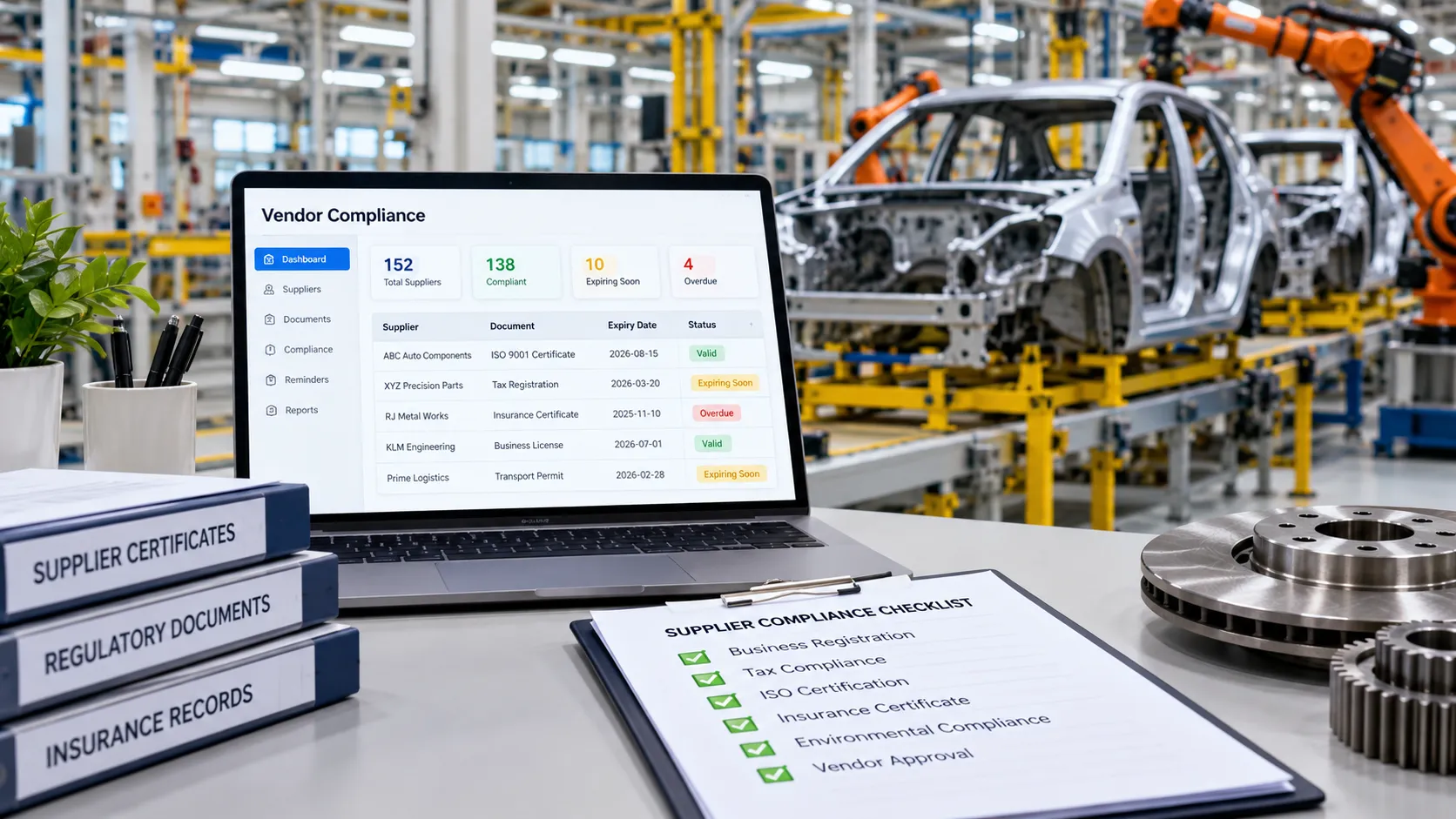
Automotive manufacturers depend on a wide supplier network. A single plant may work with component makers, raw-material suppliers, packaging companies, transport providers, and maintenance contractors.
Keeping production moving means more than checking prices, delivery dates, and product quality. Teams also need to know whether supplier records are complete, required documents are current, and outstanding reviews have been handled.
That work can become difficult when information is spread across spreadsheets, email threads, and shared folders. A document that was valid at onboarding may have expired months later, and the person responsible for following up may not know about it.
A clear vendor compliance process helps teams keep track of these details without relying on memory or last-minute searches.
What does vendor compliance mean in automotive manufacturing?
Vendor compliance is the process of checking that suppliers meet the documentation, contractual, regulatory, and internal requirements that apply to them.
The requirements vary by supplier. A transport provider may need different records from a component manufacturer or a facility maintenance contractor. Automotive manufacturers should define requirements according to the supplier’s role, the work being performed, applicable rules, and company policy.
Vendor compliance is not a substitute for supplier quality management or technical audits. It supports the administrative side of supplier management by making required records, reviews, and follow-up actions easier to track.
Common vendor compliance challenges
1. Supplier documents expire without anyone noticing
Supplier records may include business registration details, tax information, insurance documents, relevant certifications, and other records required by the buyer. Some documents have expiry dates; others need periodic review rather than renewal.
When dates are stored in separate spreadsheets or buried in email, it is easy to miss a renewal.
What helps: Keep a central register of required documents. Record the supplier, document type, status, expiry date where applicable, and person responsible for follow-up. Set reminders early enough to allow time for the supplier to respond and for the document to be reviewed.
2. Every supplier has different requirements
A standard checklist is useful, but one checklist may not suit every supplier. A logistics company, a tooling provider, and a component manufacturer may have different documentation requirements.
If the process is too generic, teams can miss important records. If it is too complicated, suppliers may be asked for documents that do not apply to them.
What helps: Create checklists for supplier categories and clearly mark which requirements are mandatory, conditional, or not applicable. Review these checklists when internal policies or applicable requirements change.
3. Audit preparation becomes a document hunt
When a customer, internal auditor, or compliance team requests supplier records, staff may have to search several folders and email conversations to find the latest version. It can also be difficult to show whether a document was reviewed and what happened when something was missing.
What helps: Store records consistently and use clear file names and status labels. Keep a record of reviews, missing items, and follow-up actions. Limit access to people who need the information, especially where supplier documents contain confidential details.
4. Nobody has a clear view of outstanding actions
A supplier may have submitted most of the required documents but still be missing one item. Without a clear owner and due date, that final step can remain open for weeks.
What helps: Assign each outstanding item to a person or team. Track its status and due date, and review overdue actions regularly. A dashboard can help teams see which suppliers need attention without opening every record individually.
5. Onboarding slows down between departments
Supplier onboarding may involve procurement, finance, quality, legal, and operations. A request can stall when one team is waiting for a review or approval from another team.
What helps: Define the steps in the onboarding process, identify who owns each step, and make pending reviews visible. Separate document collection from technical or quality approval so that each activity is handled by the appropriate team.
6. Spreadsheet maintenance takes too much time
Excel can be a sensible starting point for a small supplier base. But as supplier numbers grow, someone must keep the register updated, check expiry dates, send reminders, and follow up on missing documents. Different departments may also end up maintaining separate versions.
What helps: Start by measuring the effort spent on manual updates and follow-ups. If the process is becoming hard to control, consider a shared system that centralizes supplier records and automates routine reminders. The right choice depends on supplier volume, process complexity, and budget.
A practical way to improve supplier compliance
Manufacturers do not need to overhaul every process at once. A few consistent steps can make supplier records easier to manage.
- Map supplier categories. List the types of suppliers you work with and identify the requirements relevant to each category.
- Agree on document ownership. Decide who collects, checks, approves, and follows up on each document.
- Centralize the register. Keep supplier details, document status, expiry dates, and outstanding actions in one controlled location.
- Set reminders. Choose reminder intervals based on how much time is needed to obtain and review a renewed document.
- Review exceptions. Regularly check expired documents, missing submissions, rejected records, and overdue actions.
- Keep an audit trail. Record important reviews and follow-up outcomes so the team can understand what happened and when.
- Update the process when requirements change. Review checklists when company policies, contracts, or applicable rules change.
The aim is not to collect paperwork for its own sake. It is to make sure the right records are available, current where required, and reviewed by the right people.
Supplier compliance checklist for automotive manufacturers
Use this as a starting point and adapt it to your own supplier categories and policies.
- Define document requirements for each supplier category.
- Identify mandatory and conditional documents.
- Record expiry dates for documents that expire.
- Assign owners for collection, review, and approval.
- Track missing, rejected, and pending documents.
- Set reminders for upcoming expiries.
- Store current records in a consistent location.
- Record reviews and follow-up actions.
- Review overdue items on a regular schedule.
- Revisit the checklist when requirements change.
Not every item applies to every supplier. Your procurement, quality, legal, and compliance teams should confirm which requirements apply to each supplier type.
When does vendor compliance software make sense?
A spreadsheet may be enough when there are few suppliers, the requirements are straightforward, and someone can reliably maintain the records. It becomes harder to manage when many suppliers have different requirements, documents expire at different times, or several people need to review and approve records.
A vendor compliance tool can help centralize supplier documents, highlight missing or expiring records, send reminders, and show outstanding actions in one place. It should support the process your team needs rather than add unnecessary complexity.
VendorCompliancePro is designed to help teams organize vendor records, monitor document expiry dates, manage onboarding, and follow up on compliance tasks. It can support document tracking and administrative workflows; it does not replace technical supplier audits, quality assessments, or legal review.
Learn more about VendorCompliancePro to see whether a more structured approach could fit your supplier management process.
Frequently asked questions
What is vendor compliance in automotive manufacturing?
It is the process of ensuring suppliers meet the documentation, contractual, regulatory, and internal requirements that apply to them. Depending on the supplier, this may involve collecting records, checking their status, tracking expiry dates, and recording reviews.
Which documents should automotive manufacturers collect from suppliers?
There is no universal list for every supplier. Requirements may include business registration, tax details, insurance records, relevant certifications, and contract-related documents. The exact list should be based on the supplier’s role, applicable requirements, and company policy.
How can a manufacturer track supplier document expiry dates?
A controlled spreadsheet can work for a small supplier base if it is kept up to date. Another option is vendor compliance software that records expiry dates and sends reminders. In either case, assign an owner to follow up and verify renewed documents.
Is Excel enough for vendor compliance management?
Excel can be adequate for simple processes. If teams regularly miss expiry dates, maintain duplicate registers, or spend too much time chasing documents, a centralized system may provide better visibility and reduce manual work.
Does vendor compliance software replace supplier audits?
No. It can help organize documentation and track administrative follow-up, but it does not replace technical assessments, quality audits, on-site inspections, or professional review where those are required.
Final thoughts
Supplier compliance can become difficult to manage when records are scattered and responsibilities are unclear. Automotive manufacturers can make the process more reliable by defining requirements by supplier category, assigning owners, tracking expiry dates, and reviewing outstanding actions regularly.
Start with the gaps that cause the most rework today. If spreadsheets and email are no longer giving the team a dependable view of supplier records, consider whether a dedicated vendor compliance system would make follow-up and audit preparation easier.